Modern commemorations
Yom HaAtzma'utיוֹם הָעַצְמָאוּת
1 day – community celebrations, often on the nearest weekend · 5 Iyar (shifted so as not to touch Shabbat: if it falls on a Friday or Saturday, it is moved earlier to Thursday; if it falls on a Monday, it is postponed to Tuesday)
- History
- Halakhah
- Minhag
- Modern practice
- Interpretation
- Transliteration
- Yom HaAtzma'ut
- Pronunciation
- JOM ha-ac-ma-UT
- Duration
- Israel: 1 day (from evening to evening), a public holiday
Diaspora: 1 day – community celebrations, often on the nearest weekend
In 60 seconds
Yom HaAtzma'ut celebrates the declaration of independence of the State of Israel, read by David Ben-Gurion in Tel Aviv on 14 May 1948, that is, 5 Iyar 5708. The holiday follows immediately on Memorial Day: in the evening, the state torch-lighting ceremony on Mount Herzl ends the mourning, and celebrations, fireworks and public performances begin. The next day families go on outings and barbecue (mangal); the Israel Prize is awarded. The religious significance of the day is a matter of debate: Religious Zionists celebrate it with Hallel, the Haredim do not celebrate it, and for Arab citizens of Israel and Palestinians the anniversary is associated with the Nakba.
Next date
When
Begins
Tuesday, 11 May 2027, at sunset (20:35)
Ends
Wednesday, 12 May 2027, after nightfall (21:36)
1 day
Begins
Monday, 1 May 2028, at sunset (20:21)
Ends
Tuesday, 2 May 2028, after nightfall (21:19)
1 day
Begins
Wednesday, 18 April 2029, at sunset (20:01)
Ends
Thursday, 19 April 2029, after nightfall (20:55)
1 day
Times for Prague · Diaspora
History and origins
On 14 May 1948, the day the British Mandate ended, David Ben-Gurion read the Declaration of Independence of the State of Israel in Tel Aviv. Immediately afterward war broke out with the surrounding Arab states, which entered the fighting already under way in the country.1
For Palestinians and Arab citizens of Israel, the war of 1947–1949 is associated with the expulsion and flight of hundreds of thousands of people; they commemorate it as the Nakba ("catastrophe"), usually on 15 May.
Religious meaning
For a large part of the Jewish people, the founding of the state after the Shoah is the fulfillment of a long yearning for return and political freedom. Religious Zionism understands it as "the beginning of the flowering of our redemption" (reshit tzmichat ge’ulatenu), in the words of the Prayer for the State.2
Haredi communities generally do not celebrate the day; some of them (e.g. Satmar) hold a principled anti-Zionist position. The Reform and Conservative movements celebrate the day and have created a liturgy for it.
Core traditions
The evening ceremony on Mount Herzl with the lighting of twelve torches, fireworks, concerts, an air show, outings into nature and barbecues (mangal) are among the most widespread customs. The Israel Prize is awarded and the International Bible Contest for youth is held.
How it is observed
The Chief Rabbinate of Israel has established festive prayers; in Religious Zionist communities Hallel is recited, and there are disputes over whether it is said with or without a blessing.
Prayers and blessings
Hallel (Psalms 113–118) is recited in the morning in Religious Zionist communities; the evening service may include the sounding of the shofar and the singing of HaTikvah.3
Symbols and objects
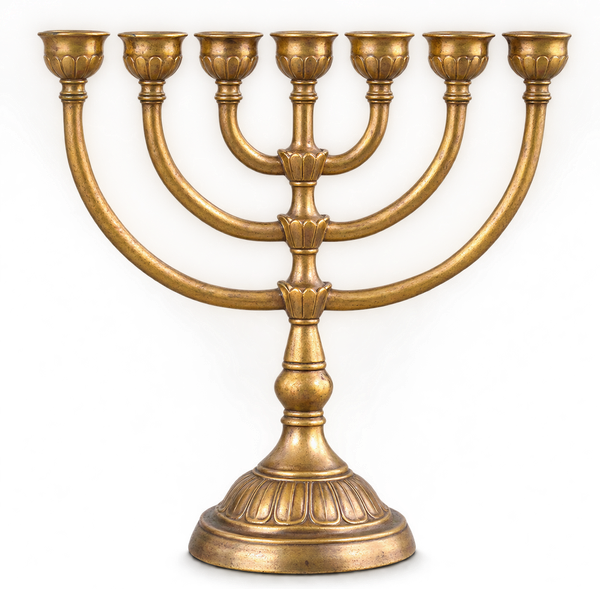
The flag with the Star of David and the state emblem with the menorah and olive branches; houses and cars are decorated with flags.
Traditional foods
Most typical is barbecuing in parks (mangal). There are no established ritual dishes.
Differences between communities
In the diaspora it is celebrated in communities and schools, often with festivals and parades, for example in New York.
Attitudes to the holiday are diverse: secular Israelis celebrate it as a civic holiday, Religious Zionists also liturgically, the Haredim mostly not, and Arab citizens commemorate the Nakba during these days.
In the Czech lands
Czechoslovakia was among the first states to recognize Israel and in 1948–1949 supplied Israel with weapons. In the Czech Republic Independence Day is celebrated with an embassy reception and events organized by the Jewish communities.
For children
Yom HaAtzma'ut is the birthday of the State of Israel. People wave flags, go on outings, grill meat and watch fireworks in the evening.
FAQ
Why is Independence Day not always celebrated on 14 May?
Israel celebrates it according to the Hebrew calendar on 5 Iyar, which shifts relative to the civil date every year.
Is Yom HaAtzma'ut a religious holiday?
It is a national holiday. Some religious communities have given it a liturgical form (Hallel); others do not celebrate it liturgically.
Why is the holiday sometimes moved?
So that neither the preparations, the ceremonies nor the preceding Memorial Day disrupt Shabbat.