Origin
Meaning
Fire, which is not kindled on Shabbat, opens the working week; the flame symbolizes human creativity and the distinction between the holy and the everyday.
Use
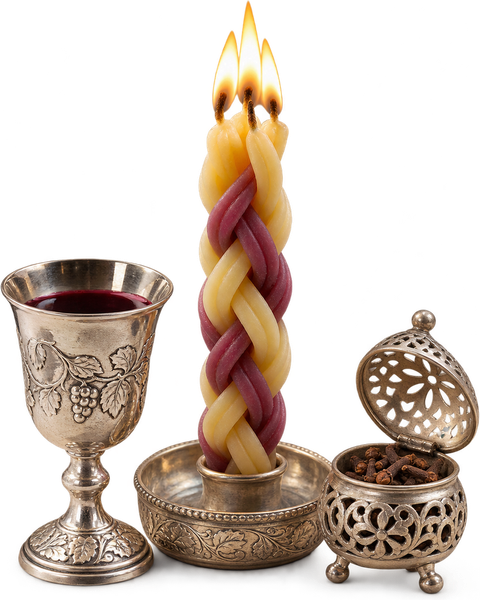
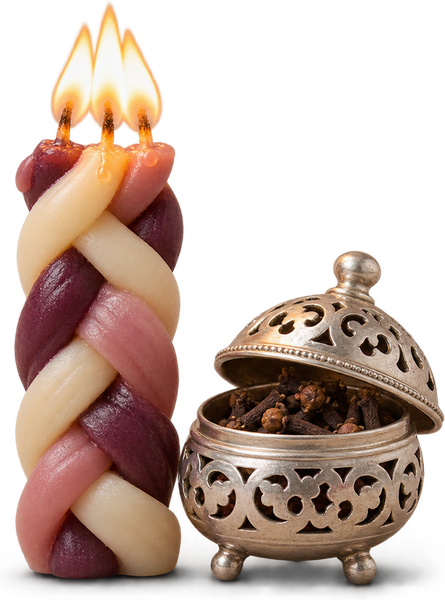
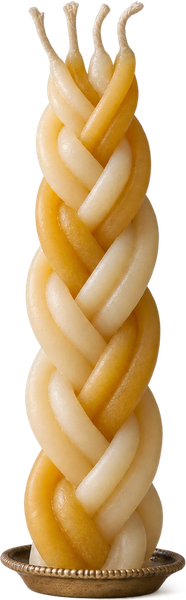
A torch (avukah) of several wicks is preferred, so a braided candle or two candles held together are used.3,4
During the blessing it is customary to look at one's fingernails in the light of the flame, so as to derive benefit from the fire.5
After havdalah the candle is extinguished in wine poured onto a saucer.
Historical development
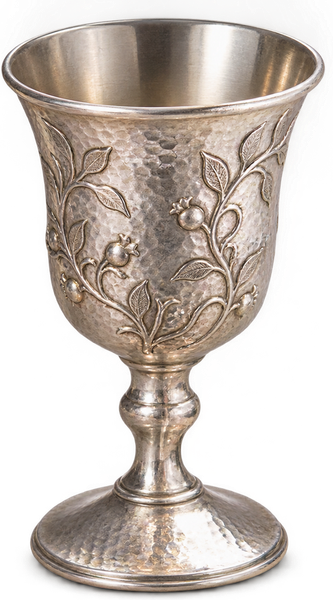
Judaica collections often contain havdalah sets: a cup, a candleholder and a spice box (besamim), often in the shape of a small tower. Such objects from the Czech lands are in the collections of the Jewish Museum in Prague.6
Related traditions
In many families a child holds the candle; folk custom links its height with the height of the future groom or bride.
At the end of Yom Kippur the blessing is recited over a light that has burned all day (ner she-shavat), not over a newly kindled one.7
FAQ
Why does a havdalah candle have several wicks?
The blessing speaks of the "lights" of fire in the plural, and a torch of several wicks is the ideal fulfillment.
Can ordinary candles be used?
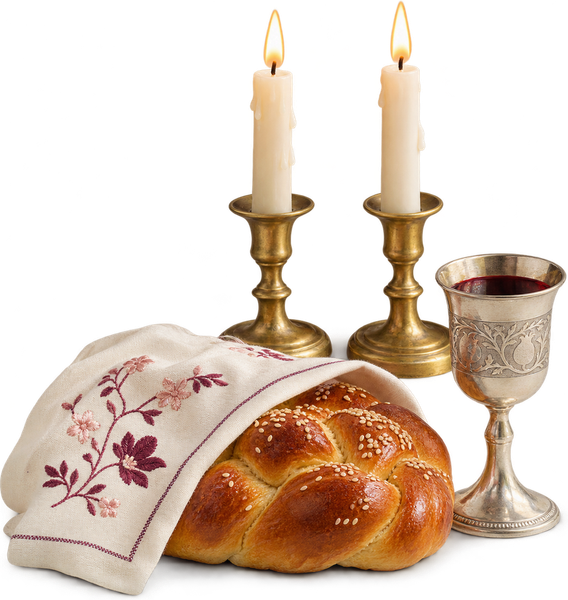
Yes, for example two candles whose flames are joined.
Why look at the fingernails?
So as to derive benefit from the flame, to which the blessing refers.