Origin
The Torah commands dwelling in sukkot for seven days, "so that your generations may know that I made the Israelites dwell in sukkot when I brought them out of Egypt".1
Meaning
The Talmud records a dispute: according to Rabbi Eliezer these were the "clouds of glory" that protected Israel in the wilderness, according to Rabbi Akiva actual booths.2
Staying in a fragile dwelling is often interpreted as an expression of trust in God and a reminder of the transience of possessions.
Use
Historical development
The Book of Nehemiah describes how, after the reading of the Torah, those who returned from the Babylonian exile built sukkot on roofs, in courtyards and in squares.7
Related traditions
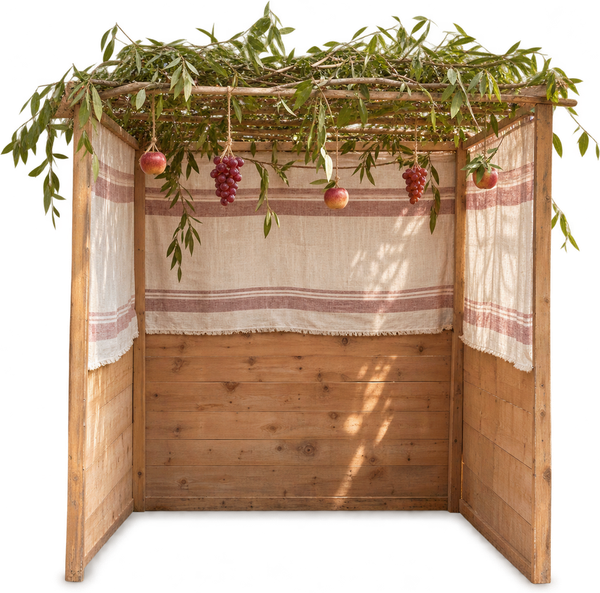
The sukkah is decorated with fruit, garlands and pictures. A widespread custom, which comes from kabbalistic tradition, is to invite the symbolic guests, the ushpizin (Abraham, Isaac, Jacob, Moses, Aaron, Joseph, David), into the sukkah.
In cities sukkot are built on balconies and in courtyards; in Prague the Jewish community builds a sukkah by the synagogues.
FAQ
Do you have to sleep in the sukkah?
According to halakhah, yes, but in cold climates many sleep at home; halakhah releases from the obligation in case of discomfort.
What may the roof be made of?
Cut plant material that is not susceptible to ritual impurity (branches, reeds, bamboo).
When is the sukkah built?
By custom, right after the end of Yom Kippur or in the following days.
Sources
Primary sources
- 1Leviticus, 23:42–43 text ↗
- 2Babylonian Talmud, Sukkah, 11b text ↗
- 3Mishnah Sukkah, 1:1 text ↗
- 4Shulchan Arukh, Orach Chayim, 626–633 text ↗
- 5Mishnah Sukkah, 2:9 text ↗
- 6Shulchan Arukh, Orach Chayim, 639 text ↗
- 7Nehemiah, 8:14–17 text ↗
- 8Mishnah Sukkah, 1–2 text ↗
- 9Shulchan Arukh, Orach Chayim, 625–644 text ↗