Mazeltov.cz explains; it does not rule. Kashrut practice varies by community, movement and family. For a specific situation, ask the rabbi of your community. The texts in this section are editorial drafts awaiting expert review.
Three verses and the oral interpretation
The Torah repeats the same sentence three times: “You shall not cook a kid in its mother’s milk” (לֹא תְבַשֵּׁל גְּדִי בַּחֲלֵב אִמּוֹ). Twice it appears in the context of the pilgrimage festivals and first fruits, the third time among the rules on permitted and forbidden foods.1,2,3
The Talmud reads the threefold repetition as three separate prohibitions: a mixture of meat and milk may not be cooked, may not be eaten, and one may not even derive benefit from it (for example, by selling it). The word “kid” is not taken literally: according to the oral interpretation it refers to the meat of any permitted domesticated mammal (cattle, sheep, goats) and to the milk of any such animal, not only the mother.4,5
The Mishnah includes the meat of poultry and wild animals in the prohibition but exempts fish and locusts. According to the majority view, the prohibition for poultry and game is rabbinic (not directly from the Torah); in practice, however, poultry is kept apart from milk just as strictly as beef.6,7
The Torah gives no reason for the prohibition. Commentators offer various explanations, from rejection of pagan rites to compassion for the animal and the separation of life and death; tradition, however, counts it among the commandments observed even without a known rationale.
What happens “on the plate”
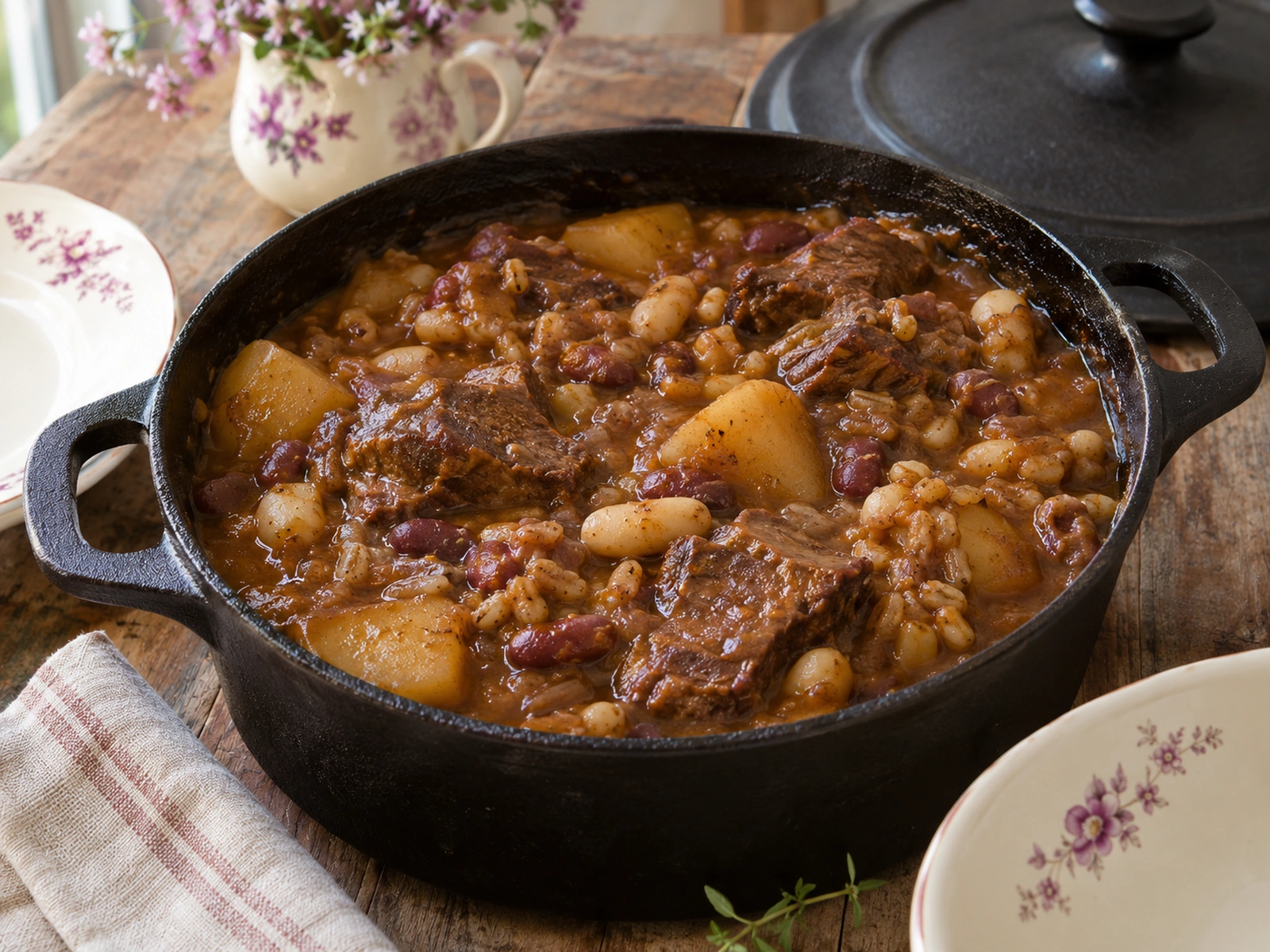
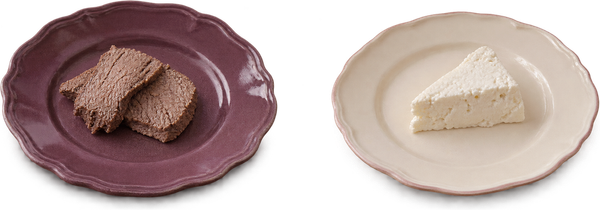
In practice, meat and dairy are not eaten in the same meal or from the same plate: no cheeseburger, no cream sauce with a schnitzel, no butter on bread served with a meat soup. The Mishnah goes further and forbids placing poultry and cheese on the table at which one eats, to avoid mistakes.6,8
Put simply: with cold and dry contact (a slice of cold meat touches a hard cheese), rinsing or wiping the spot is usually enough. With hot contact or with liquids, taste is transferred according to halakhah, and the outcome depends on temperature, quantity, and which item was on top and which below (the Talmudic principle tata’ah gavar, “the lower one prevails”). In Orthodox practice such cases are brought to a rabbi.9,10
If a small amount of dairy accidentally gets into a meat dish (or vice versa), halakhah has the principle of nullification in sixty (bitul be-shishim): if the permitted component is at least sixty times greater, the dish generally remains permitted. The calculation and the exceptions are complex; this is a rule for accidents, not a recipe.11
Separate dishes, tablecloths and sinks
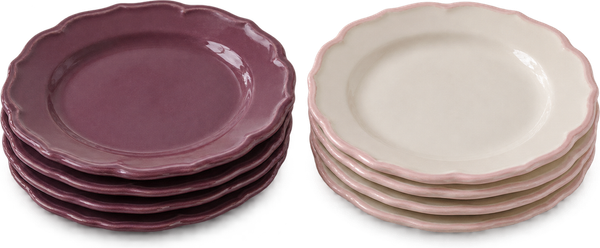
Because, according to halakhah, utensils absorb the taste of food during cooking, a kosher household has two sets: meat (fleishig) and dairy (milchig) – pots, pans, plates, cutlery, cutting boards and knives. Many households also have a third, neutral (parve) set. For more, see The Kosher Kitchen.12
In practice this means separate dish towels, sponges and tablecloths, often colour-coded (a widespread but non-binding convention: red for meat, blue for dairy). Where there is only one sink, separate basins or racks are used so that dishes do not touch the bottom of the sink. Opinions on dishwashers differ; in Orthodox practice one is usually reserved for a single category.
Traditions differ on glass: according to the Shulchan Arukh glass does not absorb, so many Sephardi Jews use it for both meat and dairy; Ashkenazi practice following the Rema is stricter and usually keeps glassware separate.13
Waiting after meat
The Talmud mentions the amora Mar Ukva, who describes himself as “vinegar, son of wine”: his father waited a full day after meat before eating dairy, whereas he waited only until the next meal. From this it is derived that one waits after a meat meal before eating dairy.14
According to Maimonides and the Shulchan Arukh, one waits six hours after meat. This period is observed by most Sephardi and Mizrahi communities and by a large part of Ashkenazi ones; it applies after poultry as well.15,16
The Rema also records a custom of waiting one hour (with grace after meals and cleaning the mouth), but adds that it is proper to wait six hours. One hour is traditionally associated with Dutch Jews, three hours with some German Jews. Such periods are the minhag of particular communities; those who belong to them follow their family custom.16
In the Conservative (Masorti) movement a shorter wait (often three hours) is commonly cited; Reform Judaism does not regard kashrut, including waiting, as binding and leaves it to personal choice. Orthodox authorities tend to be more lenient with small children and the sick.
After dairy
In the other direction the rule is milder: according to the Shulchan Arukh, after a dairy meal one may eat meat after cleaning the mouth – eating something neutral (such as a piece of bread), rinsing the mouth and washing the hands. The table is cleared and the tablecloth changed before the meat meal.17
The exception is hard, long-aged cheeses: according to the Rema and in Ashkenazi practice one waits after them as after meat. What counts as a hard cheese (aging of six months or more is often cited) is defined differently by later authorities.17
Some also wait a short time after dairy (for example half an hour or an hour), based on a kabbalistic tradition. This is an individual or family custom, not a general rule.
In practice this shows, for instance, on Shavuot, when dairy dishes are traditionally eaten (such as Cheese blintzes): many families first serve a dairy meal and then, after a break, cleaning the mouth and changing the tablecloth, a meat meal.
A shared table and substitutes
The Mishnah permits two strangers to eat at one table, one meat and the other cheese. For acquaintances who might share food, the Shulchan Arukh requires a distinguishing sign (heker): each eats on a separate placemat, or an object not normally on the table is placed between the plates.18,19
The rabbis also considered how things look from outside (mar’it ayin, “what the eye sees”). The Rema gives the example of almond milk served with meat: almonds should be placed next to it so that no one gets the impression it is cow’s milk.7
Today plant-based milks, creams and cheeses are common in shops and clearly labelled, so many authorities consider the mar’it ayin concern smaller; others recommend leaving the package on the table. Coffee with plant milk after a meat lunch is thus usually acceptable in Orthodox practice, provided the product is certified parve. See Parve and Fish and Certification and Hechsher.
FAQ
May meat and cheese touch on the same plate?
In kosher practice, meat and dairy are not put on the same plate and are eaten from separate dishes. If cold, dry contact happens by mistake, rinsing the spot is usually enough; with hot contact, Orthodox practice is to ask a rabbi.⁂ To verify
How long do I wait after meat before I can have dairy?
According to the Shulchan Arukh, six hours; this is what most communities do. Some Ashkenazi families wait three hours or one hour according to their custom. One follows the custom of one’s family and community.⁂ To verify
Do I also have to wait after dairy before eating meat?
Usually not: it is enough to eat something neutral, rinse the mouth and wash the hands. The exception in Ashkenazi practice is hard aged cheeses, after which one waits as after meat.
Is chicken meat, even though poultry gives no milk?
Yes. According to the majority view the prohibition of poultry with milk is rabbinic, but in practice poultry is treated as meat with all the consequences (dishes, waiting). Fish is not meat.
Can I eat at the same table as someone having a dairy meal?
Yes, according to the Shulchan Arukh, with a distinguishing sign between you, such as separate placemats or an object between the plates, and without sharing food.
Sources
Primary sources
- 1Exodus, 23:19 text ↗
- 2Exodus, 34:26 text ↗
- 3Deuteronomy, 14:21 text ↗
- 4Babylonian Talmud, Chullin, 115b text ↗
- 5Shulchan Arukh, Yoreh De’ah, 87:1 text ↗
- 6Mishnah Chullin, 8:1 text ↗
- 7Shulchan Arukh, Yoreh De’ah, 87:3 text ↗
- 8Shulchan Arukh, Yoreh De’ah, 88:1 text ↗
- 9Babylonian Talmud, Pesachim, 76a text ↗
- 10Shulchan Arukh, Yoreh De’ah, 91 text ↗
- 11Shulchan Arukh, Yoreh De’ah, 98 text ↗
- 12Shulchan Arukh, Yoreh De’ah, 89:4 – glosa Rema o označování nožů text ↗
- 13Shulchan Arukh, Orach Chayim, 451:26 text ↗
- 14Babylonian Talmud, Chullin, 105a text ↗
- 15Mishneh Torah, Hilchot maachalot asurot 9:28
- 16Shulchan Arukh, Yoreh De’ah, 89:1 text ↗
- 17Shulchan Arukh, Yoreh De’ah, 89:2 text ↗
- 18Mishnah Chullin, 8:2 text ↗
- 19Shulchan Arukh, Yoreh De’ah, 88:2 text ↗
- 20Mishnah Chullin, 8 text ↗
- 21Babylonian Talmud, Chullin
- 22Mishneh Torah, Hilchot maachalot asurot 9
- 23Shulchan Arukh, Yoreh De’ah, 87–97 text ↗