Origin
Meaning
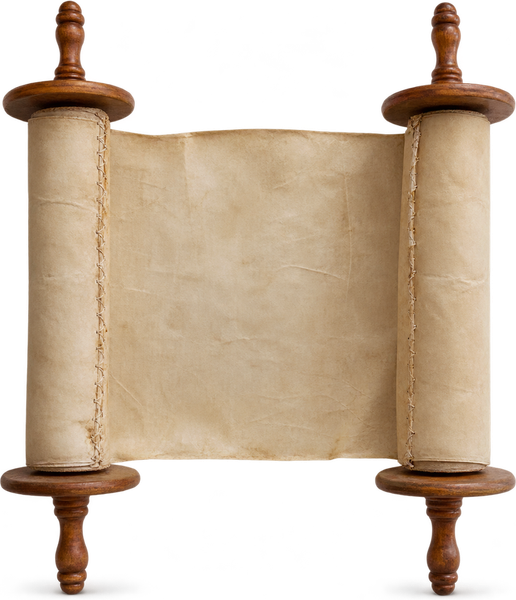
The scroll embodies the covenant between God and Israel. For this reason people stand before it and treat it with reverence; a damaged scroll is buried.5
Use
The scroll is written by a sofer (scribe) with a quill and special ink on parchment from a kosher animal, according to precise rules; an error in a single letter can invalidate the scroll.6,7
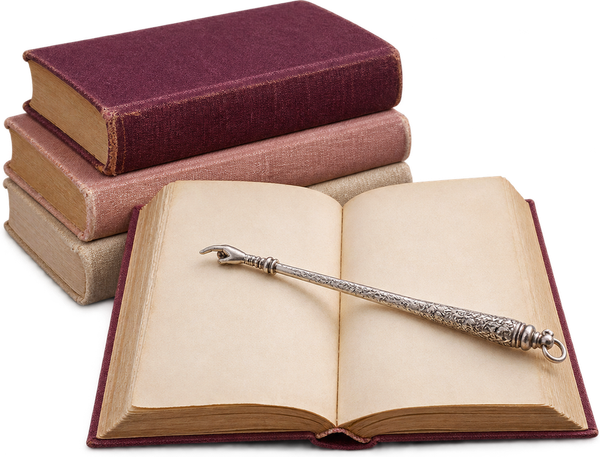
The Torah is read publicly on Shabbat, on Mondays and Thursdays, on festivals, Rosh Chodesh and fast days. The text is followed not with a finger but with a pointer (yad).8
Historical development
In Ashkenazi communities the scroll is dressed in a velvet mantle and adorned with a shield and crown; in Sephardi and Mizrahi communities it is kept in a rigid case (tik) and read standing upright.
During the Protectorate, scrolls from rural communities in Bohemia and Moravia were collected in Prague. After the war some of them ended up in storage; in the 1960s they were sold to London and, through the Memorial Scrolls Trust, lent to communities around the world.9
Related traditions
On Simchat Torah the annual cycle of readings is completed and begun again, and people dance in circles with the scrolls (hakafot).
The completion of a new scroll (siyum) is a community celebration at which members of the congregation may write in the final letters.
FAQ
How long does it take to write a Torah scroll?
For an experienced scribe, usually many months, up to about a year.⁂ To verify
What happens if a scroll is dropped?
By custom the whole community fasts or gives to charity; this is not a halakhic obligation but an expression of reverence.⁂ To verify
Why is the scroll not touched with the bare hand?
Out of reverence and to protect the writing, a yad is used to point to the text.
Sources
Primary sources
- 1Deuteronomy, 31:9–13 text ↗
- 2Deuteronomy, 31:24–26 text ↗
- 3Deuteronomy, 31:19 text ↗
- 4Babylonian Talmud, Sanhedrin, 21b text ↗
- 5Shulchan Arukh, Yoreh De’ah, 282 text ↗
- 6Shulchan Arukh, Yoreh De’ah, 271–284 text ↗
- 7Babylonian Talmud, Menachot, 29b text ↗
- 8Babylonian Talmud, Bava Kamma, 82a text ↗
- 10Deuteronomy, 31 text ↗
- 11Shulchan Arukh, Yoreh De’ah, 270–284 text ↗