Mazeltov.cz מסביר, לא פוסק. מנהגי הכשרות משתנים לפי קהילה, זרם ומשפחה. בשאלה מעשית פנו לרב הקהילה שלכם. הטקסטים במדור זה הם טיוטת מערכת שממתינה לבדיקה מקצועית.
Two sets of dishes
The division of food into meat (fleishig), dairy (milchig) and neutral (pareve) – see Meat and Milk and Parve and Fish – also divides the kitchen. Halakhah starts from the idea that a vessel used hot absorbs the taste of the food (beli'ah) and can release it again. A pot used for cooking meat therefore may not be used to cook a dairy dish, and vice versa.1
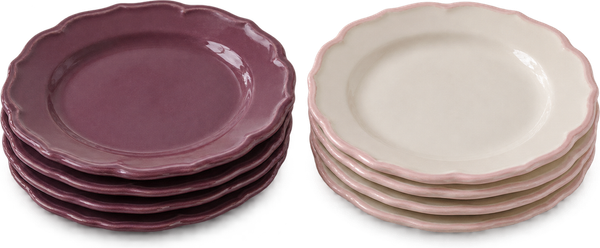
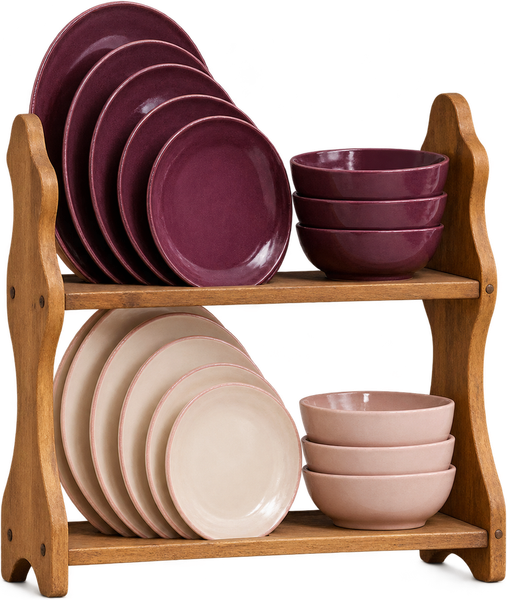
In Orthodox and traditional practice a household has two complete sets: pots, pans, plates, cutlery, chopping boards, knives, colanders and even dish towels. Many families also keep a third, pareve set (for example for baking bread or cutting vegetables), so that the food remains usable with both meat and dairy.
The sets are usually distinguished by colour, pattern or material, and cupboards by labels. A widespread but non-binding convention is red for meat and blue for dairy; pareve is often marked green or white. What matters is that everyone in the household knows the system.
The Conservative/Masorti movement in principle requires separate dishes, with varying strictness in practice. Reform Judaism regards it as a personal choice; many families keep only part of the rules, for example not mixing meat and milk in one meal while not separating their dishes.
Sink, dishwasher, oven and microwave
Sink: where possible, traditional households have two sinks. Otherwise dishes are not washed directly in the sink but in separate basins or on racks, designated for meat and for dairy.
Dishwasher: whether meat and dairy dishes may be washed in one dishwasher (in separate cycles) is disputed among contemporary rabbinic authorities. Common Orthodox practice is to have two dishwashers or to reserve the dishwasher for one kind only.
Oven and microwave: because food is heated in them and steam is produced, many households have two ovens, or reserve the oven for one kind and bake food of the other kind covered (double-wrapped). The same applies to the microwave. Details on how long to wait and how to clean the oven vary from rabbi to rabbi.
The stovetop is usually shared; burners are cleaned between uses, and pots are not placed next to each other where they could splash into one another. The table, too, is distinguished for dairy and meat meals by a different tablecloth or placemats.
Materials and kashering
The biblical basis for kashering is the instruction after the war against Midian: whatever withstands fire is to pass through fire, and whatever does not withstand fire is to pass through water. The Talmud and the codes derive from it the principle that a vessel is purged in the same way in which it absorbed taste.2
Hagalah (הַגְעָלָה) is immersing a clean metal vessel in boiling water; it suits vessels that absorbed taste through liquid (pots, cutlery). Libun (לִבּוּן) is heating to a glow; it is required for vessels used directly on fire without liquid (a grill, a baking tray). According to the codes the vessel must first be thoroughly clean and, as a rule, unused for 24 hours.3,4
Ceramics, porcelain and stoneware (earthenware, kli cheres) never fully release absorbed taste according to halakhah, and therefore cannot be kashered. The source is the verse about the earthenware vessel in which a sacrifice was cooked and which must be broken.5
Glass: according to the Shulchan Arukh (Sephardi practice) glass does not absorb taste and washing it is sufficient. According to the Rema (Ashkenazi practice) glass cannot be kashered, especially for Passover. In everyday practice many Ashkenazi households treat a single set of glassware in different ways; the decision rests with the local rabbi.6
Plastic, Teflon, enamel and electrical appliances are modern questions that the codes do not answer directly. Contemporary authorities differ on whether and how they can be kashered; many Orthodox rabbis do not consider kashering non-stick surfaces possible.
Immersing new vessels (tevilat kelim)
According to halakhah, new food vessels made by or bought from a non-Jew are immersed in a mikveh before first use (tevilat kelim, טְבִילַת כֵּלִים). The Talmud derives this obligation from the same passage in Numbers as kashering.7,8,9
According to the codes, the obligation applies to metal and glass vessels that come into contact with food; in Orthodox practice the blessing al tevilat keli is recited over a metal vessel. For porcelain, ceramics and plastic practice varies and follows the rabbi’s guidance.9
Many communities have a special smaller mikveh for vessels (mikveh kelim). The vessel is immersed entirely, without stickers or packaging. Conservative/Masorti and Reform communities observe this custom less often.
When a mistake happens
Mistakes happen even in careful households: a meat spoon in a dairy sauce, a drop of milk in a meat pot. The traditional advice is simple: do not throw anything away or kasher it blindly, set the food and the vessel aside and ask a rabbi. The answer depends on whether things were hot or cold, how large the quantity was and whether the vessel had been used in the previous 24 hours.
One of the principles a rabbi works with is bitul be-shishim (בִּטּוּל בְּשִׁשִּׁים): a forbidden admixture that entered a dish unintentionally and whose volume is at most one sixtieth of the whole is, under certain conditions, considered nullified. The principle does not apply if the admixture was added deliberately, and it has many exceptions; it is therefore not a rule to apply on one’s own.10
Whether an affected vessel can be kashered depends on its material (see above). In Orthodox practice a ceramic vessel is usually discarded in such a case, while a metal one is often kashered.
A guest in a kosher home
A visitor to a kosher home does not need to know the rules; it is enough to respect that the kitchen has its own order. The safest course is not to bring your own food into the kitchen, not to take utensils from cupboards without asking, and to ask what goes where before helping with the dishes.
Gifts: the host usually cannot use home-cooked food from a non-kosher kitchen, even if it is made from the “right” ingredients. Good choices are flowers, a non-food gift, or packaged food or wine with a certification (hechsher) the host accepts – see Certification and Hechsher and Wine, Bread and Cooking. If unsure, ask in advance.
After a meat meal hosts usually do not offer a dairy dessert or coffee with milk; this is about observing the waiting period, not about inhospitality. On Shabbat a traditional home observes further restrictions (for example not switching appliances on), see שבת.
If a guest who keeps kosher visits someone who does not, it is common to say openly in advance what they can eat (for example fruit, packaged products, food on disposable dishes). Such arrangements are usual in Jewish settings and are not considered impolite.
שאלות נפוצות
Can I bring my own food to a kosher home?
Better to ask first. Food from a non-kosher kitchen or in a non-kosher container usually cannot be heated in the host’s oven or served on their dishes. Packaged certified products are usually fine.
Is glass meat or dairy?
According to the Shulchan Arukh glass does not absorb taste, so Sephardi practice often uses it for both. Ashkenazi practice following the Rema is stricter. Each household follows its own rabbi.⁂ לאימות
Can porcelain or ceramics be kashered?
According to halakhah, generally not, because earthenware never fully releases absorbed taste. Metal vessels can usually be kashered (hagalah, libun).
Do I have to immerse new dishes in a mikveh?
In Orthodox practice yes, for metal or glass food vessels made by or bought from a non-Jew. Practice varies for other materials. The Jewish community can tell you where a mikveh for vessels is available.
A meat spoon fell into a dairy soup. What now?
Do not throw anything away or kasher anything; set the soup and the spoon aside and ask a rabbi. The outcome depends on temperature, quantity and other circumstances; one of the principles considered is bitul be-shishim.
מקורות
מקורות ראשוניים
- 1Shulchan Arukh, Yoreh De’ah, 87–97 text ↗
- 2Numbers, 31:21–23 text ↗
- 3Shulchan Arukh, Yoreh De’ah, 121 text ↗
- 4Shulchan Arukh, Orach Chayim, 451 text ↗
- 5Leviticus, 6:21 text ↗
- 6Shulchan Arukh, Orach Chayim, 451:26 text ↗
- 7Numbers, 31:23 text ↗
- 8Babylonian Talmud, Avodah Zarah, 75b text ↗
- 9Shulchan Arukh, Yoreh De’ah, 120 text ↗
- 10Shulchan Arukh, Yoreh De’ah, 98 text ↗