דילוג לתוכן

פראג · כ״ח חשון תשפ״ז

שבת השבוע · 16:02–17:11

אשכנזי

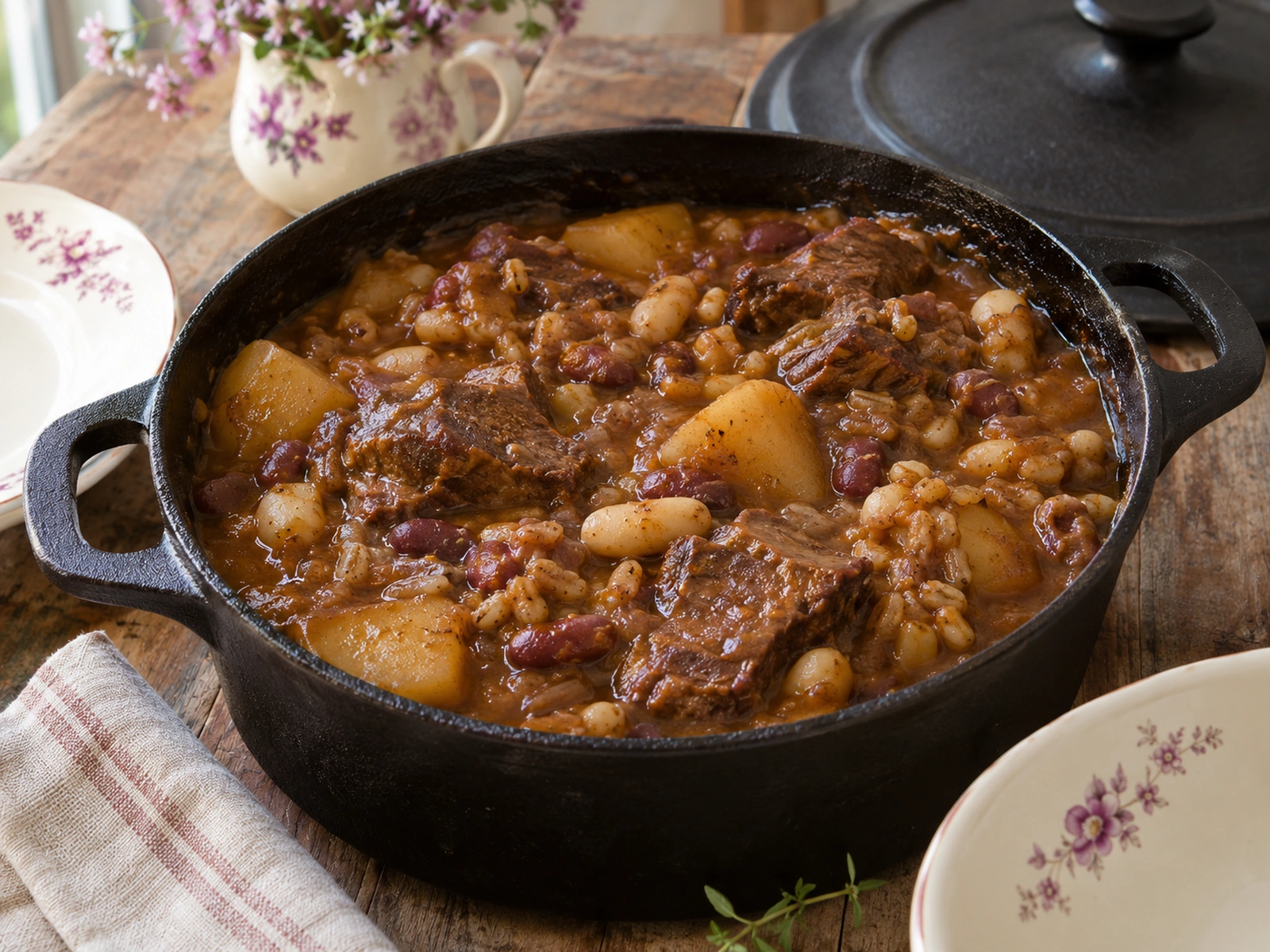
Cholent

ממתין לבדיקת מומחים

A hearty stew of meat, beans, barley and potatoes that finishes cooking slowly overnight and is served for Saturday lunch.

מנות
8 מנות
הכנה
30 דק׳
בישול
720 דק׳
רמת קושי
בינוני
כשרות · בשריסיווג לפי המצרכים, לא תעודת כשרות. פרטים בהמשך.
לחגיםשבת

התרגום לעברית בהכנה. מוצג הטקסט המקורי.

Cholent

מצרכים

8
מנות

אופן ההכנה

  1. שלב 1: Soak the beans in cold water the day before; drain them before cooking.

  2. שלב 2: Heat the oil in a heavy (cast-iron) pot and brown the meat on all sides. Remove it.

  3. שלב 3: In the drippings, sauté the chopped onion until soft, add the crushed garlic and the paprika and fry briefly.

  4. שלב 4: Place the peeled potatoes cut into large chunks on the bottom, then the meat, beans and barley, and the onion on top.

  5. שלב 5: Season with salt and pepper, add the honey and pour in water so that everything is about 2 cm below the surface.

  6. שלב 6: Bring to a boil and cook covered for 1 hour, so that the dish is cooked to an edible state before Shabbat.

  7. שלב 7: Before Shabbat begins, transfer the pot to an oven preheated to 95–100 °C (or to a slow cooker on LOW) and leave it until Saturday lunch, i.e. 12–18 hours.

  8. שלב 8: Check the consistency before serving: cholent should be thick and creamy, not watery.

טיפים

  • The amount of water matters most: too little and the cholent burns, too much and it becomes soup. Try checking your first batch on Friday afternoon.
  • You can place 4–6 raw eggs in their shells on top; overnight they turn brown and creamy.

היסטוריה ומקורות

הלכה⁂ לאימות

A hot dish for Saturday lunch solves a traditional problem: there is no cooking on Shabbat, but food prepared in advance may be kept warm. Rabbinic tradition also emphasized hot food on Shabbat as a rejection of the Karaite interpretation, which forbade the use of fire prepared in advance.1

היסטוריהאשכנזים⁂ לאימות

The origin of the word cholent (shalet) is uncertain; it is most often derived from Old French chald ("warm"), though other explanations exist.

גרסאות אזוריות

מנהגספרדיםמזרחים

Sephardi and Middle Eastern counterparts are called chamin ("hot") and include Moroccan Dafina and Iraqi tbit; they often contain eggs cooked in their shells overnight.2

מנהגאשכנזיםארצות צ׳כיה

Ashkenazi cholent often has kishke (a casing stuffed with flour and fat) or a dumpling (kneidl) baked into it. In the Czech lands it developed into šoulet.
מתאים לצד

מקורות