היסטוריה ומקורות
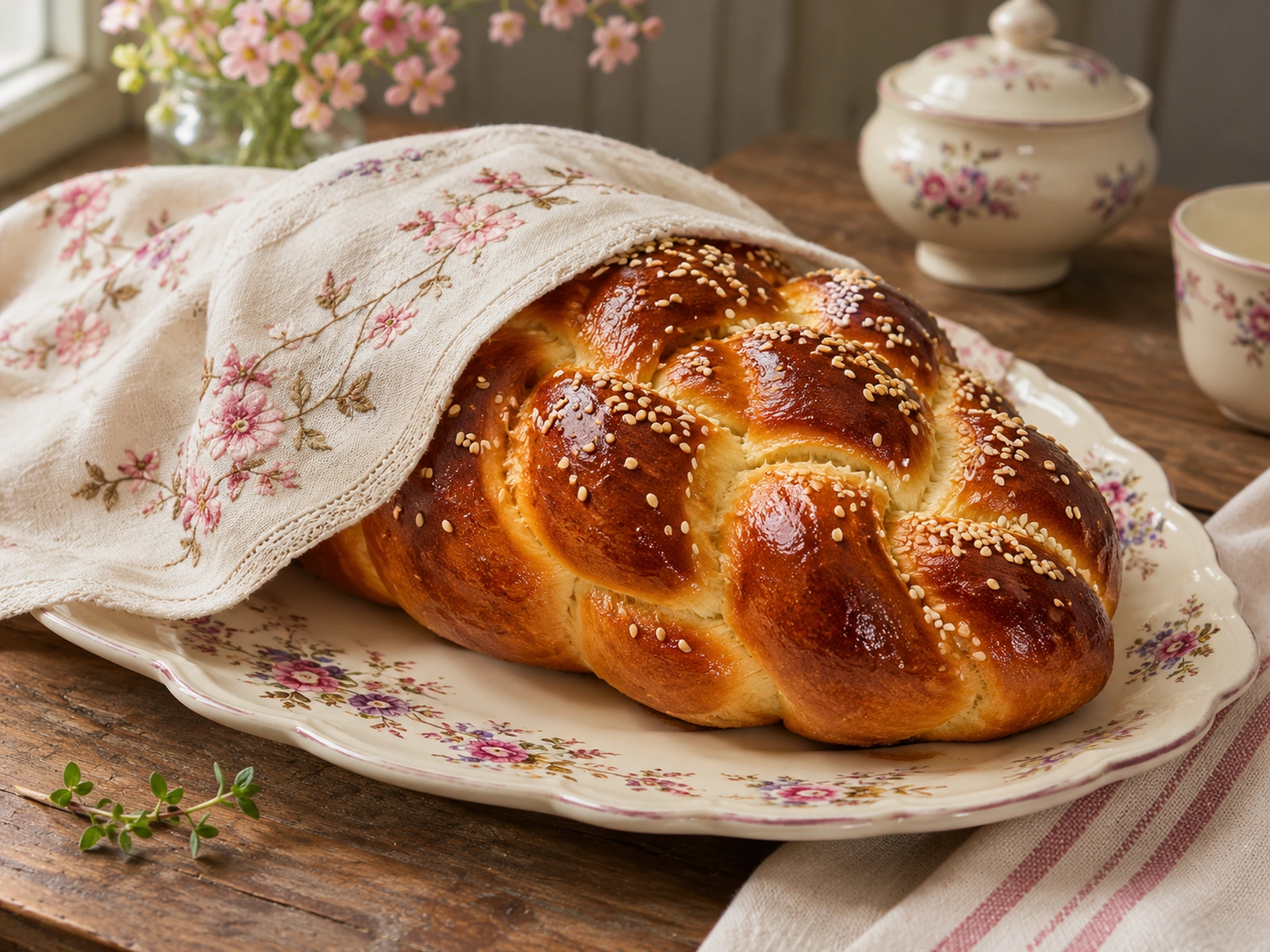
In the Torah the word challah חַלָּה denotes a portion of the dough that was given to the priest. This commandment (hafrashat challah) is still observed symbolically today by separating a small piece of dough; only later was the word transferred to the festive bread itself.1
Two loaves (lechem mishneh) are placed on the Shabbat table as a reminder of the double portion of manna that the Israelites gathered on Friday.2
The braided form made from a rich egg dough is typical of the Ashkenazi communities of Central and Eastern Europe; in German and some Central European areas the Shabbat bread was also called barches (berches).3
גרסאות אזוריות
For Rosh Hashanah challah is traditionally baked round (often in a spiral), sometimes with raisins and honey; the circle is often interpreted as a symbol of the cycle of the year.
Sephardi and Middle Eastern communities have their own festive breads, often unbraided and flavored with anise or sesame; the braided egg challah is primarily an Ashkenazi tradition.