Origin and significance
Layout
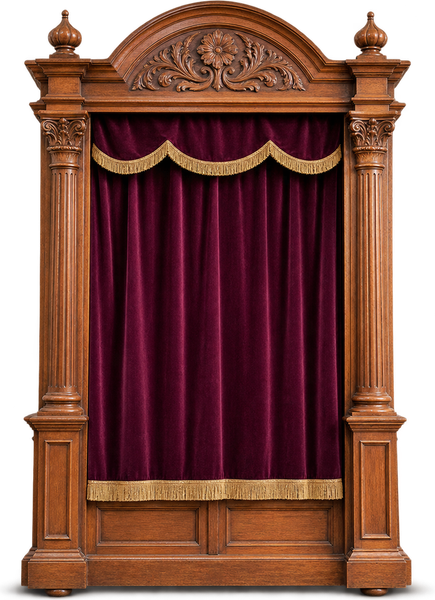
The ark (aron ha-kodesh) with the Torah scrolls usually stands in the wall facing Jerusalem; in front of it burns the eternal light (ner tamid). The Torah is read from a raised platform (bimah).5
Traditionally the bimah is in the center; 19th-century Reform synagogues often moved it to the front. In Orthodox synagogues men and women are separated (by a mechitzah or a women's gallery); in Conservative and Reform ones, families sit together.
People and the service
The service is led by a prayer leader (chazzan, shaliach tzibbur), the Torah is read by the baal koreh, and the gabbai looks after the running of things; the rabbi is a teacher and an arbiter in questions of halakhah, not a priest.
Prague
The Old-New Synagogue (Altneuschul), from the second half of the 13th century, is the oldest synagogue in Europe still in use; it is associated with the Maharal.7
The Pinkas Synagogue serves as a memorial to the Shoah victims from Bohemia and Moravia, with the names of nearly 80,000 people on its walls.8
שאלות נפוצות
Can I attend a service as a non-Jew?
Usually yes; it is best to let them know in advance, men cover their heads, clothing should be modest, and no photographs are taken on Shabbat.
Is a synagogue holy like the Temple?
Not in the same sense; it is a "small sanctuary", but it has its own dignity and rules of conduct.
מקורות
מקורות ראשוניים
- 1Ezekiel, 11:16 text ↗
- 2Babylonian Talmud, Megillah, 29a text ↗
- 3Nehemiah, 8:1–8 text ↗
- 4Babylonian Talmud, Bava Kamma, 82a text ↗
- 5I Kings, 8:48 text ↗
- 6Mishnah Megillah, 4:3 text ↗